
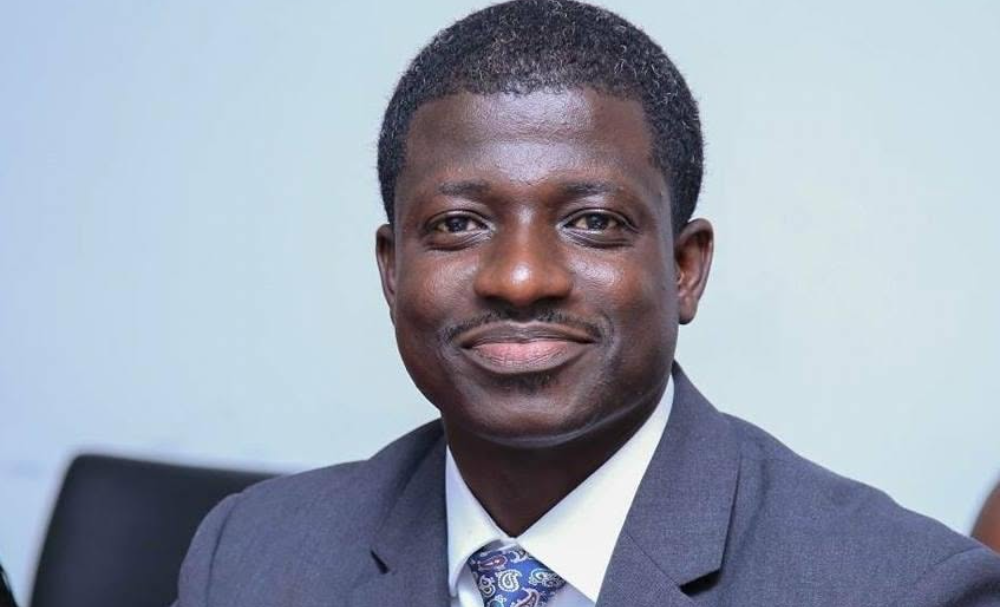
Nearly two decades after serving as President of the Students’ Representative Council (SRC) of the Kwame Nkrumah University of Science and Technology, Kumasi (KNUST), David Boateng Asante looks back on a tenure marked by the completion of the first phase of the SRC Hostel, expansion of student financial support and improvements to campus transportation.
David won the SRC presidential election in October 2005 and assumed office in 2006.
One of the major projects completed during his administration was the first phase of the SRC Hostel, a project that had begun about four years before his administration took office.
“I think one of the major things we did was the completion of phase one of the SRC Hostel,” he said.
He said his administration helped bring the phase to completion, after which students were admitted into the facility.
His administration also acquired a new Coaster bus for the SRC, which he described as the first brand-new bus purchased by the Council.
The vehicle was handed over to the University and added to its fleet but dedicated primarily to SRC activities.
Expanding the Ketewa Biara Nsua Fund
Student financial support was another priority.
David's administration expanded the Ketewa Biara Nsua (KBN) Fund, an SRC initiative through which contributions from students were pooled to provide financial assistance to brilliant but needy students.
“A percentage, just something small, was taken from student fees and then put in the SRC account to support needy and brilliant students,” he said.
David said the fund supported more than 1,000 students during his tenure.
“We supported a huge number of students who otherwise had difficulties in supporting their education as of that time,” he said.
The initiative reflected the principle behind Ketewa Biara Nsua, that small individual contributions, when brought together, could provide meaningful support to members of the student community.
Strengthening the campus shuttle system
Transportation was also high on the administration's agenda.
David said engagement between the SRC and University management helped deepen the campus shuttle system, providing an internal transport arrangement to help students commute between their halls of residence and academic areas.
“We had a lot of engagement with the University in 2006 and 2007, and then initiated and fully implemented what we call the shuttle system,” he said.
“The shuttle system in KNUST and on campus was deepened in our time as SRC President.”
For Boateng Asante, however, the SRC presidency offered more than an opportunity to undertake projects. It provided an early education in governance and leadership.
He was about 24 or 25 when he became SRC President and, by virtue of the office, participated in some of the University's highest decision-making structures.
“For a young man at that age of around 24, 25 to be elected as President of the Students’ Representative Council gave me the opportunity to sit with the Vice-Chancellors at University Council because the SRC President is a member of the University Council,” he said.
“Leadership at the highest level started from there. Boardroom experience started from the University, certainly with the University Council.”
He also recalled participating in the Academic Board and university procurement structures, experiences which exposed him to institutional decision-making at a relatively young age.
David said the opportunity to interact with the Chancellor, Vice-Chancellor and members of the University Council provided practical lessons in leadership and institutional governance.
“Entirely, the governance structure of the University had a room in there for the President of the Students’ Representative Council,” he said.
From KNUST SRC to national politics and public office
The student leader would later become a familiar figure in Ghana's national political and governance space.
David emerged prominently as lead Convener of the Let My Vote Count Alliance (LMVCA), a political pressure group that campaigned on electoral issues, including demands for reforms to Ghana's voters' register ahead of the 2016 general election. His role placed him at the centre of some of the country's major public debates and demonstrations over electoral reform during the period.
In 2017, President Nana Addo Dankwa Akufo-Addo appointed him Managing Director of Ghana Publishing Company Limited (GPCL), the state-owned publishing company traditionally associated with the Assembly Press. His appointment took effect on Aug. 1, 2017.
His tenure at GPCL would last more than seven years.
State ownership reports listed David as head and Managing Director of the company, while he pursued a programme of modernisation, including investments in equipment, electronic payment systems and the digitalisation of aspects of the company's operations.
His political ambitions also extended to parliamentary politics.
In 2020, David filed to contest the New Patriotic Party parliamentary primary for the Nkawkaw Constituency in the Eastern Region.
He returned for another attempt ahead of the 2024 general election, again seeking the NPP parliamentary nomination for Nkawkaw. It was his second bid to represent the constituency on the party's ticket.
His tenure as Managing Director of Ghana Publishing Company ended in February 2025, when he handed over the company to Nana Kwasi Boaitey. GPCL described David as its immediate past Managing Director at the handover ceremony.
The trajectory from SRC President to political activist, parliamentary aspirant and chief executive of a state-owned enterprise gives added meaning to Boateng Asante's reflections on the opportunities student leadership provided him.
“Those were brilliant and bright opportunities for young student leaders to sharpen their leadership skills,” he said.
“It prepared us for a smooth take-off to the national level where we quickly took off from there after graduating in 2007.”
Looking back nearly two decades later, David remembers an SRC era in which advocacy and engagement with university authorities were central to student leadership.
“We had a great advocacy time as student leaders,” he said. “A beautiful time.”
Story: Emmanuel Kwasi Debrah


